How ADHD Impacts Romantic Communication (and What Actually Helps)
Feb 17, 2026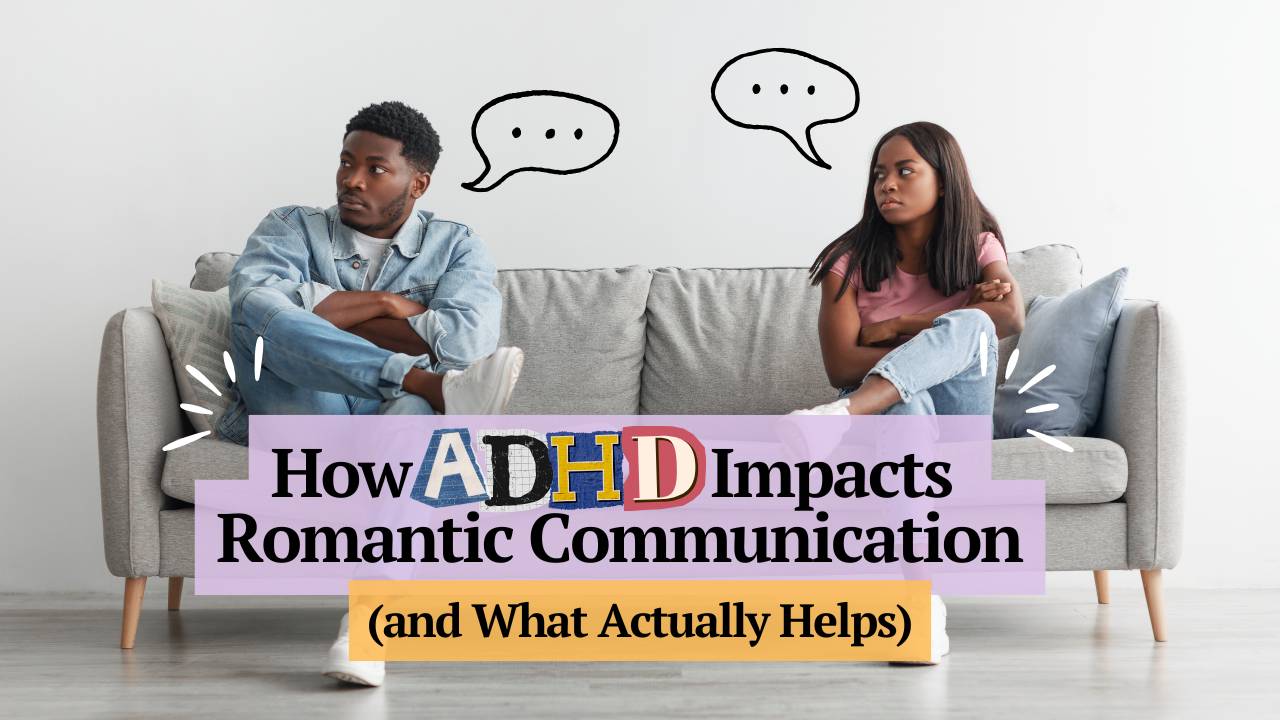
They weren’t fighting when they sat down in my office.
They were calm. Polite. Careful.
One of them said, “I feel like I’m always explaining myself.” The other said, “I feel like no matter what I say, it’s wrong.”
As we talked, a familiar pattern emerged. Conversations that started small somehow escalated. Texts were misread. Timing was off. One person felt unheard; the other felt overwhelmed. Both felt confused about how something so simple could feel so hard.
This is a pattern I see often in relationships where ADHD is part of the dynamic—whether it’s been named yet or not. And it’s rarely about a lack of love. It’s about how the ADHD brain processes emotion, attention, and meaning in real time.
Once that lens comes into focus, communication struggles stop looking like personal failures and start making a lot more sense.
What’s Actually Happening Beneath the Miscommunication
When ADHD is part of the relationship—whether diagnosed or not—communication breakdowns often aren’t about effort or care. They’re about timing, regulation, and interpretation. And without understanding that, partners can end up arguing about the same things for years.
ADHD affects more than attention. It also impacts:
-
working memory
-
emotional regulation
-
impulse control
-
processing speed
Research shows that adults with ADHD may struggle to hold multiple pieces of information in mind during emotionally charged conversations, especially when stress is present (Barkley, 2015). That means a partner can genuinely care—and still miss key details, forget follow-ups, or respond in ways that feel dismissive or reactive.
On the other side, partners without ADHD may experience this as:
-
not being listened to
-
not being prioritized
-
having to repeat themselves
Neither person is wrong. But without context, both often feel alone.
Why Small Moments Turn Into Big Conflicts
Many couples don’t fight about the topic they think they’re fighting about.
They’re fighting about tone. Timing. The moment someone interrupted. The text that wasn’t answered. The emotional meaning attached to all of it.
In ADHD relationships, misattunement can happen quickly. Emotional responses may arrive faster than reflective ones, and conversations can escalate before either person realizes what’s happening. Neuroscience helps explain this: when emotions run high, the brain’s threat system activates, and access to thoughtful communication decreases (Schore, 2019).
That’s when defensiveness, shutdown, or over-explaining tends to appear—not because someone doesn’t care, but because the nervous system is overwhelmed.
Try This: Communication Supports That Actually Help
1. Slow the Conversation Down on Purpose
What it is: Reducing speed to increase understanding.
Why it works: ADHD brains often process emotion faster than language.
How to do it: Pause more than feels necessary. Let silence exist. Agree that slowing down is a strategy, not avoidance.
2. Say the Meaning, Not Just the Words
What it is: Making emotional intent explicit.
Why it works: ADHD can interfere with reading subtext.
How to do it: Instead of assuming your partner knows why something matters, try: “What I really need you to hear is…”
3. Choose Timing Over Urgency
What it is: Separating emotional need from immediate processing.
Why it works: Regulation comes before resolution.
How to do it: Ask, “Is now a good time to talk about this?” If not, schedule it—and honor that commitment.
4. Repair More Than You Explain
What it is: Focusing on reconnection rather than justification.
Why it works: Explanations don’t soothe nervous systems—repair does.
How to do it: Lead with empathy before clarification: “I can see how that landed. That wasn’t my intention.”
What Healthy Communication Really Looks Like
Healthy communication in ADHD relationships isn’t perfect. It’s flexible.
It includes:
-
revisiting conversations
-
repairing missteps
-
learning each other’s nervous systems
-
letting go of the idea that love should be effortless
When couples understand that ADHD changes how communication happens—not how much someone cares—blame softens. Curiosity grows. And the connection becomes more sustainable.
Sometimes the most powerful shift isn’t learning new words. It’s learning how to listen beneath them.
If this blog resonated because you see yourself—or your partner—in these patterns, and you want support navigating ADHD and relationships, you’re not alone. My free guide, What to Ask Before You Hire an ADHD Therapist or Coach, can help you take the first step. It gives you the right questions to ask so you find someone who truly understands your brain, your nervous system, and your life—so your support feels like a lifeline, not a lecture.
References
Barkley, R. A. (2015). Attention-deficit hyperactivity disorder: A handbook for diagnosis and treatment (4th ed.). Guilford Press.
Schore, A. N. (2019). Right brain psychotherapy. W. W. Norton & Company.