The Hidden Link Between Mindfulness and Inner Peace
Dec 09, 2025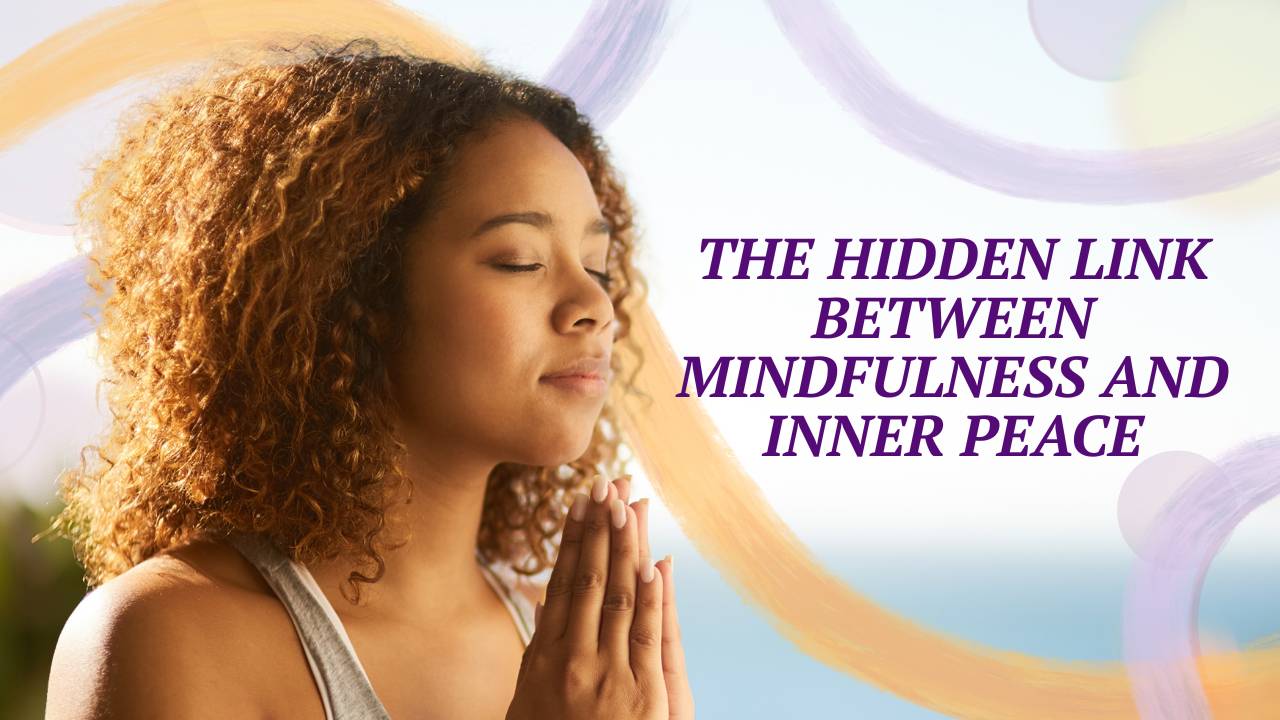
It was a Thursday afternoon, and I could see how visibly agitated my client was, even over Zoom. "I don’t know what’s wrong," she said. "I did all the things this week—the gym, the meal prep, even some yoga—but I still feel like I’m buzzing inside."
I asked her to pause. To notice the way her breath was sitting at the top of her chest. To feel her feet on the ground. To bring her attention to the moment, not the week. After just a few slow breaths, she blinked and said, "That... helped."
This is mindfulness.
Not a grand practice or a spiritual mountaintop moment. Just presence. And it can change everything.
Mindfulness, defined simply, is the act of paying attention on purpose, in the present moment, without judgment (Kabat-Zinn, 1994). While it’s often misunderstood as meditation or deep breathing alone, mindfulness is actually a way of being. And when practiced consistently, it can regulate the nervous system, reduce emotional reactivity, and foster a deep, grounded sense of peace (Hölzel et al., 2011).
Why It Works
The brain is a pattern-seeking machine. When we live in constant anticipation—worrying about tomorrow or ruminating on yesterday—our sympathetic nervous system stays on high alert. That "buzzing inside" feeling my client described? It's the body's stress response, always ready for action.
Mindfulness interrupts that. Research shows that regular mindfulness practice increases activity in brain regions associated with emotional regulation and decreases activity in the amygdala, the brain's fear center (Tang, Hölzel, & Posner, 2015). In short, mindfulness helps us come home to ourselves.
Try This
1.) The 3-2-1 Grounding Practice
Why It Works: Engages the senses to shift out of fight-or-flight. How to Use It: Name 3 things you see, 2 things you hear, 1 thing you can feel. Try This: Next time you feel overwhelmed, use this as a reset. Bonus points if you're barefoot on the earth.
2.) Mindful Sips
Why It Works: Slows down your nervous system and centers attention. How to Use It: Choose a warm drink and take 3 intentional sips, noticing aroma, texture, and sensation. Try This: Create a ritual—mid-morning tea, post-session cocoa, evening broth. Let it be sacred.
3.) Inner Weather Report
Why It Works: Builds emotional awareness and regulation. How to Use It: Ask yourself, "What’s the weather like inside me today?" Cloudy, sunny, stormy—just name it. Try This: Pair this check-in with journaling to track your internal patterns over time.
4.) Name the Moment
Why It Works: Anchors awareness in the now, builds the "observer" muscle. How to Use It: Simply say to yourself, "This is me, feeling rushed," or "This is me, taking a breath." Try This: Use this technique to interrupt spirals. Naming shifts the brain from reaction to reflection.
My client now keeps a sticky note on her laptop that reads, "Notice your feet." It's not a huge act. But it's a gateway to peace. And in this fast-moving world, small gateways matter. [Client confidentiality respected: Any examples used are composites or shared with permission.]
References:
Hölzel, B. K., Lazar, S. W., Gard, T., Schuman-Olivier, Z., Vago, D. R., & Ott, U. (2011). How does mindfulness meditation work? Proposing mechanisms of action from a conceptual and neural perspective. Perspectives on Psychological Science, 6(6), 537–559. https://doi.org/10.1177/1745691611419671
Kabat-Zinn, J. (1994). Wherever you go, there you are: Mindfulness meditation in everyday life. Hachette Books.
Tang, Y. Y., Hölzel, B. K., & Posner, M. I. (2015). The neuroscience of mindfulness meditation. Nature Reviews Neuroscience, 16(4), 213–225. https://doi.org/10.1038/nrn3916
✨ If you’re looking to deepen your mindfulness practice and create more grounded peace in your daily life, I have two self-study paths to support you.
👉 Explore courses that might resonate with what you need right now.