Why Rejection Hurts So Much with ADHD: Understanding Rejection Sensitive Dysphoria
Feb 10, 2026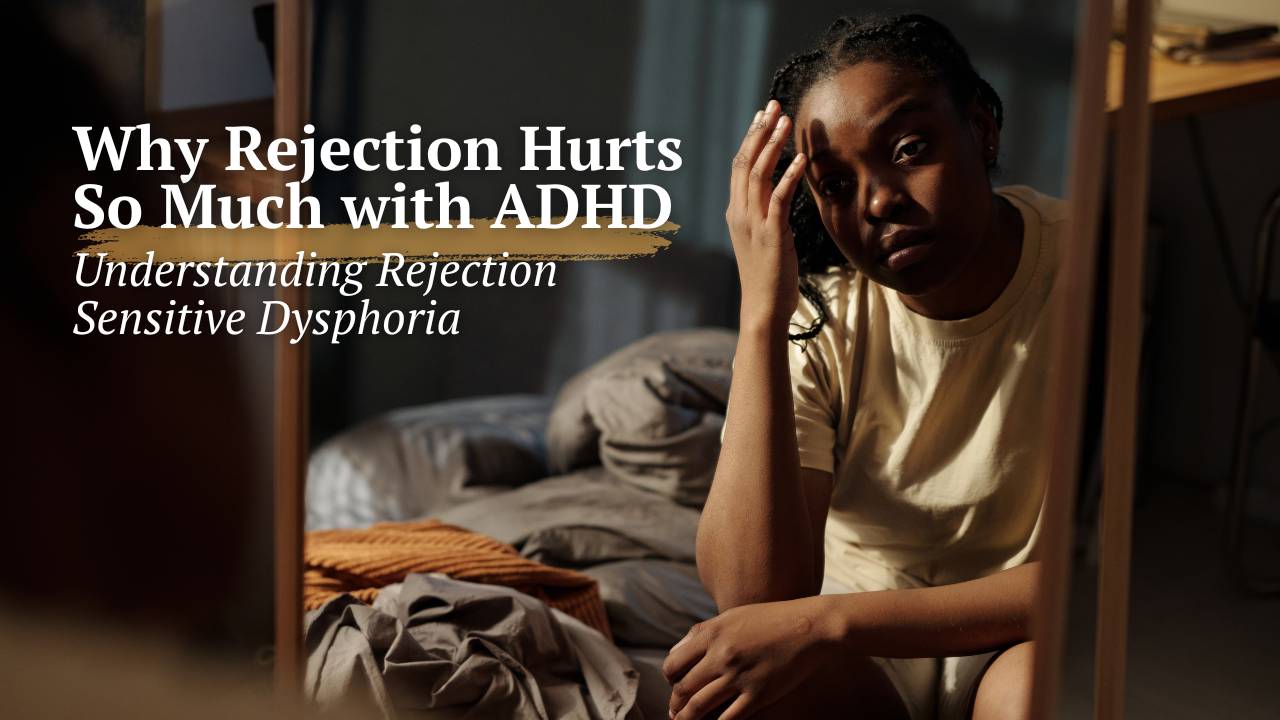
There’s a moment many adults with ADHD recognize instantly.
You send a text and don’t hear back. Someone’s tone shifts slightly. A partner sighs. A friend cancels. A colleague sounds neutral instead of warm.
And suddenly, something inside tightens.
“It’s me.”
“I did something wrong.”
“I’m too much.”
Or "maybe I’m not enough.”
For many people with ADHD, rejection sensitivity isn’t about being fragile or dramatic. It’s about how the brain and nervous system learned to protect against loss—often very early, and often very quietly.
What Rejection Sensitivity Really Is
Rejection Sensitive (RS) or Rejection Sensitive Dysphoria (RSD) isn’t a formal diagnosis, but it’s a well-documented pattern among people with ADHD. It refers to intense emotional pain triggered by perceived rejection, criticism, or disappointment—whether real or imagined.
Neurologically, ADHD involves differences in emotional regulation and threat detection. Research shows that the ADHD brain can respond more intensely to emotional cues, particularly those related to social evaluation (Barkley, 2015). Add a history of being misunderstood, corrected, or labeled “too much,” and the nervous system learns to stay on high alert.
In relationships, this can look like:
-
reading between lines that aren’t there
-
bracing for abandonment even in stable connections
-
replaying conversations long after they end
-
swinging between closeness and withdrawal
The pain is real—even when the threat isn’t.
Why Relationships Are a Common Trigger
Most adults with ADHD didn’t grow up being celebrated for how their minds worked.
Many were told they were:
-
too sensitive
-
too intense
-
too forgetful
-
too emotional
-
or, paradoxically, not trying hard enough
Over time, those experiences shape an internal narrative: Connection is fragile. Love is conditional. I have to monitor myself to belong.
Neuroscience supports this. When the brain anticipates rejection, the amygdala—the threat center—activates quickly, while the prefrontal cortex, responsible for perspective and reasoning, goes offline (Schore, 2019). In that state, reassurance doesn’t land easily, and logic rarely helps.
What’s happening isn’t immaturity. It’s protection.
Try This: Soothing Rejection Sensitivity in Real Time
1. Separate the Trigger from the Truth
What it is: Learning to pause between perception and meaning.
Why it works: RSD collapses emotional reaction and interpretation into one moment.
How to do it: When the surge hits, try saying: “Something just got activated. I don’t know the full story yet.” That pause alone can prevent spiraling.
2. Name the Old Story
What it is: Identifying the familiar narrative underneath the pain.
Why it works: RSD often repeats early relational wounds, not current reality.
How to do it: Ask gently: “Does this feel familiar?” If the intensity feels bigger than the moment, it probably is.
3. Ground the Body Before the Mind
What it is: Regulating first, analyzing later.
Why it works: You can’t think your way out of a nervous system response.
How to do it: Slow the exhale. Feel your feet. Press your hands together. Then revisit the interaction once your body settles.
4. Practice Relational Reality-Checking
What it is: Learning to test assumptions without self-blame.
Why it works: RSD thrives in isolation and silence.
How to do it: When appropriate, try: “When I didn’t hear back, I noticed I made up a story. Can you help me understand what was happening for you?” This builds intimacy instead of distance.
Coming Back to the Core Wound
At the heart of rejection sensitivity is often a painful belief formed long ago:
If I were different, this wouldn’t hurt.
But healing doesn’t come from becoming smaller, quieter, or easier to love. It comes from learning to stay present with yourself when that old fear shows up—and choosing connection over self-erasure.
For many adults with ADHD, the work isn’t to stop feeling deeply. It’s to stop abandoning themselves in moments of perceived rejection.
And that, over time, changes everything.
If this is something you’re still navigating on your own — or you’re thinking about getting support for it — I created a free guide to help you start from a grounded place.
What to Ask Before You Hire an ADHD Therapist or Coach walks you through how to find support that actually understands you — so you don’t have to figure it out by trial and error.
→ Download the free guide here
References
Barkley, R. A. (2015). Attention-deficit hyperactivity disorder: A handbook for diagnosis and treatment (4th ed.). Guilford Press.
Schore, A. N. (2019). Right brain psychotherapy. W. W. Norton & Company.