Why So Many Black Women Feel Guilty Resting
Jun 16, 2026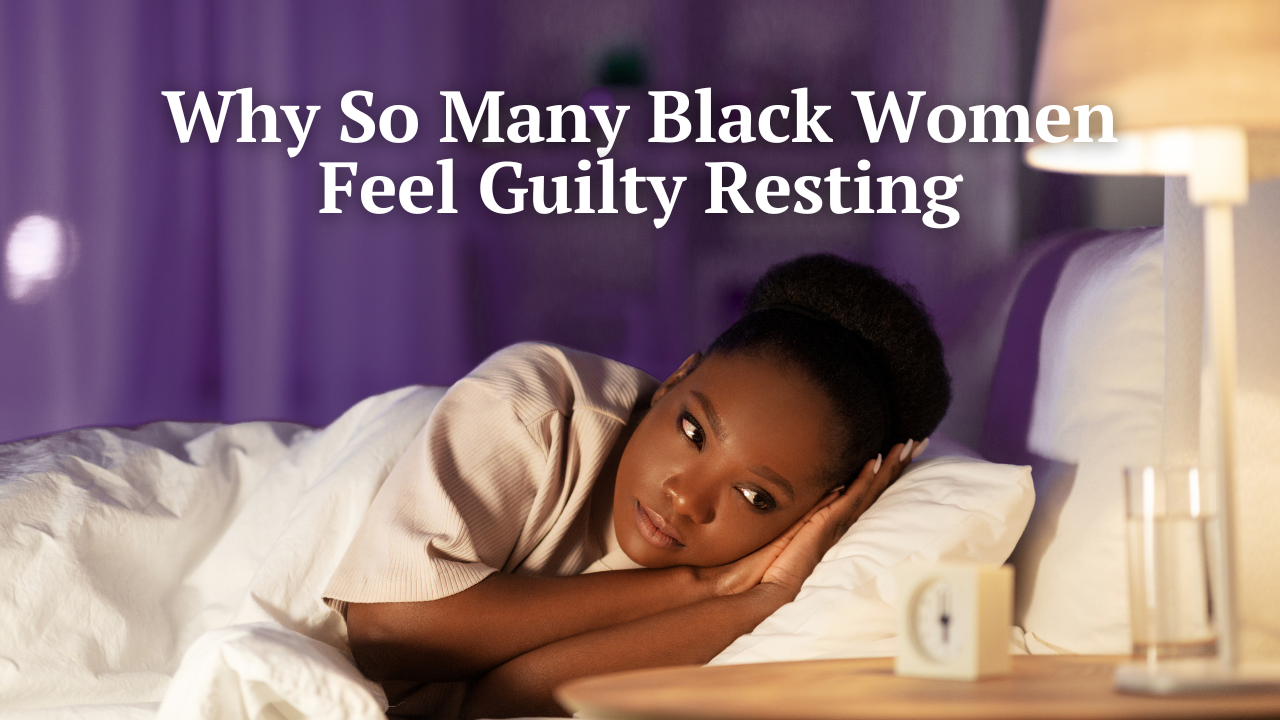
By early May, I was exhausted.
Not the kind of exhaustion that disappears with one good night of sleep or a lazy Sunday afternoon. The deeper kind. The kind that settles into your shoulders, your patience, your concentration, and eventually your spirit.
I had spent weeks training police officers, traveling, managing a six-day workweek, supporting clients through difficult moments, and carrying the emotional weight that often comes with doing equity-centered work as a Black woman inside systems that have historically harmed people who look like me.
Part of my work involves training law enforcement officers to better recognize and respond to mental health crises. Much of that work is rooted in helping officers slow down, recognize symptoms instead of stereotypes, and respond with greater humanity, especially when interacting with people of color experiencing emotional distress.
For me, that work matters deeply.
It is one of the ways I choose to contribute to change. One of the ways I try to move hearts and minds forward. One conversation, one training, one officer at a time.
But meaningful work can still be exhausting.
So I finally looked at my calendar and intentionally blocked off three full days to rest.
And I noticed something had changed.
For years, taking time off came with guilt. I would mentally negotiate with myself, justify it, or feel pressure to “earn” rest through exhaustion first. But this time felt different. This year, I scheduled those days without apology. And interestingly, I felt lighter the moment I did it. Even with full days of work still ahead of me, my nervous system seemed to relax at the thought of rest.
Now, as Juneteenth approaches, I keep thinking about that moment.
Because Juneteenth is not only about physical freedom. It is also an invitation to reflect on emotional, psychological, and generational freedom too. And for many Black women, rest does not automatically feel safe.
Many of us were raised, either directly or indirectly, to associate our value with what we produce, solve, carry, fix, organize, survive, or endure. Rest can feel emotionally complicated when your nervous system has been trained to believe that staying alert is responsible, productive, or even necessary for survival.
Historically, Black women have often occupied roles that required constant labor, caregiving, emotional regulation, vigilance, and resilience. Over generations, these patterns do not just shape culture. They shape nervous systems.
Research on chronic stress and racialized stress exposure suggests that repeated activation of the body’s stress response can have long-term psychological and physiological consequences, including increased rates of hypertension, anxiety, depression, sleep disruption, and burnout (Carter, 2007; Geronimus et al., 2006). Researchers have also explored how the “Strong Black Woman” schema can contribute to emotional suppression, self-sacrifice, and delayed help-seeking behaviors, even when stress becomes overwhelming (Watson & Hunter, 2015).
In other words, sometimes the difficulty is not realizing we need rest. It is believing we are allowed to take it. It is beliving that we deserve to take the rest.
I see this often in my work as a psychologist.
Many high-achieving Black women know how to push through exhaustion with extraordinary skill. They know how to keep performing even when depleted. They know how to care for everyone else while quietly running on emotional fumes themselves. What they often do not know how to do is pause without feeling anxious about it. Because when your nervous system becomes accustomed to survival mode, stillness can initially feel unfamiliar. Sometimes even uncomfortable.
For some people, rest creates space for emotions they have been outrunning. For others, it creates fear that they are falling behind. And for many, there is an internal voice whispering: “You should be doing something.”
That voice is rarely just personal. It is often cultural, generational, and deeply conditioned.
This is one reason I believe conversations about freedom must include psychological freedom, too.
Freedom is not only external. It is also internal.
It is the ability to exist without constantly proving your worth, without exhausting yourself.
It is the ability to sit down without having to explain why. To protect your peace without writing a ten-page defense brief worthy of a Supreme Court filing. To say, “I need rest,” without immediately following it with an apology, justification, or productivity plan.
For me, scheduling those three days off was not just about taking a break. It was a quiet reminder that I no longer believe exhaustion is the price of my worth.
That unlearning has taken years.
Years of noticing how easily overwork gets praised. Years of realizing how often depletion gets normalized. Years of understanding that burnout is not a badge of honor, even when society hands it out like employee-of-the-month certificates.
Ironically, the more I prioritize rest, the better I actually show up.
I am more present with clients. More creative. More patient. More connected to Spirit. More able to hear my own inner guidance instead of simply reacting to urgency all day long.
Rest does not diminish my effectiveness. It protects it.
And that matters because exhaustion changes people.
Research consistently shows that chronic stress impairs concentration, emotional regulation, memory, sleep quality, and decision-making (McEwen, 2017). Burnout has also been associated with increased cynicism, emotional exhaustion, and decreased empathy over time (Maslach & Leiter, 2016).
You cannot continuously override your body’s signals forever without eventually paying a price.
The nervous system always keeps receipts.
That does not mean we all need luxury vacations, expensive retreats, or perfectly curated self-care routines involving matching linen sets and cucumber water floating in imported glassware like tiny spa life preservers.
Sometimes rest is much simpler than that.
Sometimes it looks like: turning your phone off, taking a walk, saying no, canceling something unnecessary, sleeping longer, sitting quietly, or allowing yourself one day where your value is not measured by productivity.
Sometimes rest is simply refusing to abandon yourself.
Try This
If rest feels emotionally complicated for you, start here.
1. Notice Your Internal Reaction to Rest
What it is: Paying attention to the thoughts and emotions that arise when you intentionally slow down.
Why it works: Awareness helps uncover the beliefs your nervous system has attached to rest, productivity, and worth.
How to do it: The next time you pause, notice what immediately comes up. Do you feel guilty? Anxious? Lazy? Behind? Simply noticing the reaction is an important first step.
2. Create Small Moments of Non-Productive Time
What it is: Allowing yourself brief periods where you are not multitasking, fixing, producing, or “earning” your right to relax.
Why it works: Small moments of intentional stillness help teach the nervous system that rest is safe.
How to do it: Start small. Sit quietly for five minutes. Take a slow walk without turning it into a phone call or productivity session. Let yourself experience a moment that exists simply because you are human.
3. Pay Attention to What Exhaustion Is Costing You
What it is: Honestly evaluating the emotional, mental, and physical impact of chronic overextension.
Why it works: Many people normalize exhaustion until they begin recognizing how deeply it affects their mood, patience, creativity, relationships, and health.
How to do it: Ask yourself: “Who do I become when I am consistently depleted?” Then ask: “Who do I become when I am rested?”
4. Ask Yourself a Different Question
What it is: Shifting away from productivity-centered thinking toward humanity-centered thinking.
Why it works: Many high-achieving people automatically evaluate themselves based on output. Changing the question helps interrupt that conditioning.
How to do it: Instead of asking, “How much more can I get done?” try asking, “What would help me feel more human right now?”
As Juneteenth approaches, I find myself thinking about freedom differently than I once did. Not just freedom as achievement. Not just freedom as success. Not just freedom as endurance.
But freedom as the ability to live without constantly overriding your own humanity.
And for many of us, healing begins when we stop treating rest like something that must first be earned through suffering. If you are realizing how deeply exhaustion, overfunctioning, burnout, or survival mode have shaped your life, therapy can offer a space to begin untangling those patterns with compassion and support. In my work, I help high-achieving Black women better understand their nervous systems, reconnect with themselves beyond productivity, and build healthier, more sustainable ways of living and coping.
If you would like support on that journey, I offer a free consultation call where we can explore what you’ve been carrying and what healing might look like for you.
⟶ You can learn more and book a free consult here
References
Carter, R. T. (2007). Racism and psychological and emotional injury: Recognizing and assessing race-based traumatic stress. The Counseling Psychologist, 35(1), 13–105.
Geronimus, A. T., Hicken, M., Keene, D., & Bound, J. (2006). “Weathering” and age patterns of allostatic load scores among Blacks and Whites in the United States. American Journal of Public Health, 96(5), 826–833.
Maslach, C., & Leiter, M. P. (2016). Understanding the burnout experience: Recent research and its implications for psychiatry. World Psychiatry, 15(2), 103–111.
McEwen, B. S. (2017). Neurobiological and systemic effects of chronic stress. Chronic Stress, 1, 1–11.
Watson, N. N., & Hunter, C. D. (2015). Anxiety and depression among African American women: The costs of strength and negative attitudes toward psychological help-seeking. Cultural Diversity and Ethnic Minority Psychology, 21(4), 604–612.