Therapy Wasn’t for People Like Her (Part 1)
Jan 13, 2026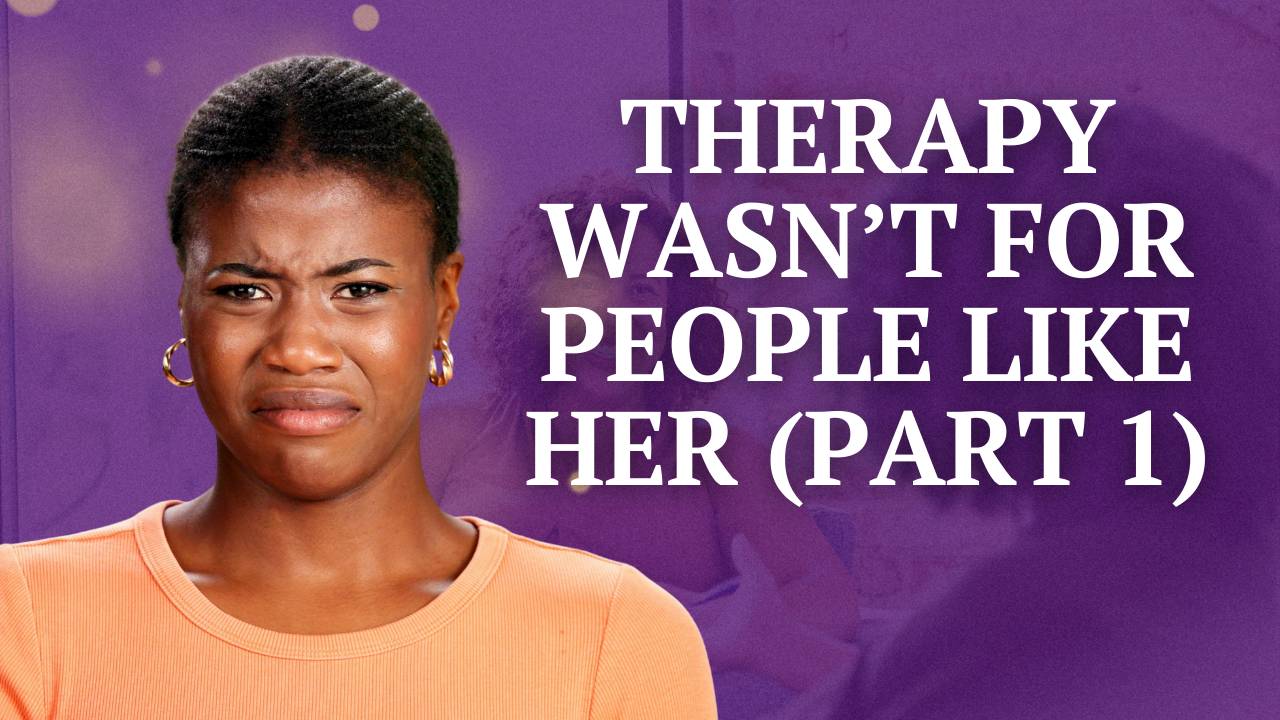
Therapy continues to carry a powerful stigma. Many people believe it’s only for those who are falling apart, unable to cope, or somehow broken. As part of my upcoming book, You Don’t Have to Be Crazy to See a Therapist, I’m sharing stories from my clinical work to help demystify what therapy actually looks like—and how it can support people who are functioning, capable, and still struggling.
The stories in this series are drawn from my work as a psychologist. Identifying details have been changed, and some stories are composites of clients with similar experiences, challenges, or themes. My hope is that these narratives offer clarity, recognition, and a more honest understanding of how therapy works.
Nia did not think therapy was for people like her.
She said it plainly in our first meeting, almost casually:
“I’m not falling apart or anything. I just want to make sure I’m not missing something.”
That sentence alone told me a lot.
Nia was successful. Responsible. The one people leaned on. She showed up for work, handled family responsibilities, and kept things moving even when she was tired—especially when she was tired. In her mind, therapy was for people who couldn’t function. People who had time to sit around talking about feelings. People who were, in her words, “really struggling.”
She wasn’t crazy. She wasn’t weak. She wasn’t failing.
She was exhausted.
When I asked what had prompted her to reach out now, she paused.
“I don’t know,” she said. “I mean… things are fine. I just feel like I’m carrying a lot.”
That word—carrying—came up often.
Nia had learned how to survive without support. How to compartmentalize. How to keep going. When something hurt, she minimized it. When she was overwhelmed, she pushed through. She had mastered the art of telling herself, I’ll deal with this later, and then never circling back.
She named some of her concerns quickly, as if saying them too slowly might make them real.
“I don’t want to be judged.” “I don’t want to be misunderstood.” “I don’t want someone trying to fix me.”
Then, after a beat, she added:
“And I don’t want to open something I can’t put back.”
There it was.
Like many Black women, Nia had learned that strength meant endurance. You keep going. You handle your business. You don’t fall apart because other people are counting on you.
“If I can still get up and do what I need to do,” she said, “then I’m okay. Right?”
But “okay” was doing a lot of work.
As we talked, a quieter picture emerged. Nia was snapping at people she loved and then feeling guilty about it. She was lying awake at night, replaying conversations and responsibilities. Her body was tense all the time—shoulders tight, jaw clenched, breath shallow—but she had learned to ignore those signals.
“Other people have it worse,” she said more than once.
She told herself she should be grateful. She told herself she’d rest when things calmed down.
The problem was, things never really did.
What finally brought Nia into my office wasn’t a breakdown. It was a moment of clarity that arrived quietly.
“I can feel myself getting close to something,” she said slowly. “I don’t know what it is. I just know I can’t keep doing this the same way.”
She hadn’t fallen apart.
But the strategies she had relied on her whole life—pushing through, minimizing her needs, staying strong—were no longer working the way they used to. They were keeping her functional, but not well. Capable, but not at peace.
She didn’t come to therapy because everything collapsed.
She came because continuing the same way no longer felt like an option.
That’s where we’ll pause.
In Part 2, I’ll share what surprised Nia most about therapy—and why discovering that therapy was for people like her changed far more than she expected.
Client details have been changed to protect confidentiality.
If this story resonated, I encourage you to share it with someone who may be curious about therapy—or hesitant to consider it. These stories are part of my upcoming book, You Don’t Have to Be Crazy to See a Therapist, which explores common myths about therapy, what actually happens in the room, and how people use therapy not because they’re broken, but because they want to live with more clarity, ease, and intention.
If you’d like a practical next step, you can download my free guide, How to Interview a Therapist (So You Actually Find the Right One)—a practical guide to choosing a therapist who fits you, not the other way around. You’ll also be the first to know when the book is released and when new stories in this series are published.