Nature Is the Original Mindfulness Practice
Aug 25, 2026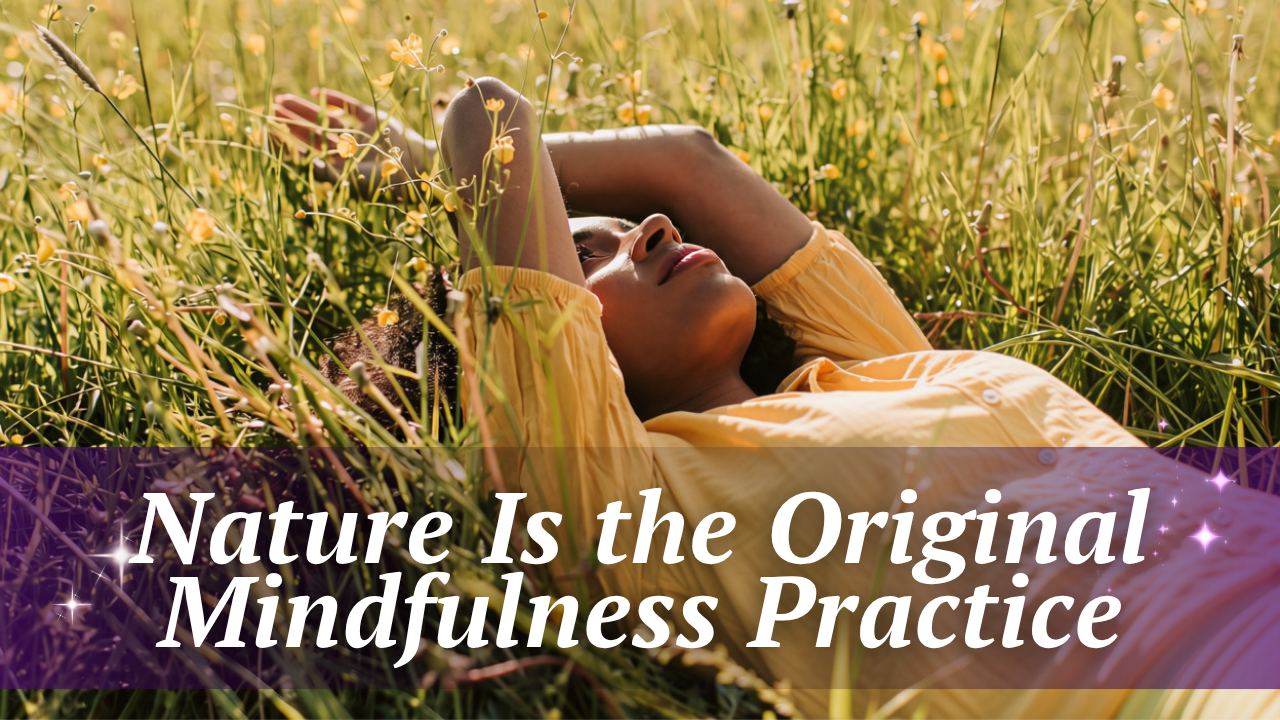
People often tell me they've tried mindfulness, but it just isn't for them.
"I can't quiet my mind."
"I can't sit still."
"I've tried meditation apps."
"I guess I'm just bad at it."
Every time I hear that, I smile.
Not because mindfulness is easy.
But because I think we've made it much more complicated than it needs to be.
Most mornings, I begin my day with a walk.
Even in the winter.
In fact, I have a heated vest and a heated coat because I've learned that if I'm dressed for the weather, I'm much more likely to keep the habit going.
Sometimes I'm listening to an audiobook.
Usually, it's about ADHD or other areas of psychological science (murder mysteries or thrillers on my "no thinking" days off).
I love learning.
But somewhere along the walk, I usually reach up and turn the audio off.
Not because the book isn't interesting.
Because I don't want to miss what nature has to say.
That's when I start hearing the birds.
I notice the wind moving through the trees.
I watch the sunlight filter through the leaves.
Some mornings, I don't think about anything at all.
Other mornings, a solution to a problem quietly appears.
Either way, I return home feeling more present than when I left.
It occurred to me one day that maybe this is mindfulness.
Not an app.
Not a perfectly still mind.
Not twenty minutes on a meditation cushion.
Just paying attention.
Mindfulness has been defined as paying attention to the present moment with openness and without judgment (Kabat-Zinn, 1994).
Nature makes that surprisingly easy.
It gives our attention somewhere gentle to rest.
A bird doesn't ask us to analyze it.
The breeze doesn't expect anything from us.
The rain doesn't need us to understand it.
Nature simply invites us to notice.
As a psychologist, I spend a great deal of time helping people understand their thoughts.
As the Inner Peace Doctor, I've learned something equally important.
Not every thought needs to be followed.
Sometimes it simply needs to be interrupted by the sound of a bird or the feeling of the sun on your face.
I don't think nature asks us to become different people.
I think it quietly reminds us of who we are underneath all the noise.
Try This
You don't need special equipment or a meditation app to practice mindfulness this week.
Just step outside.
1. Turn Something Off
What it is: Creating a few minutes without constant input.
Why it works: Our minds need moments of quiet to notice what we've been missing.
How to do it: If you're listening to music, a podcast, or an audiobook, turn it off for just five minutes and simply notice what's around you.
2. Choose One Sense
What it is: Focusing on a single part of your experience.
Why it works: Paying attention to one sense naturally brings you into the present moment.
How to do it: Listen for birds. Feel the breeze. Notice the warmth of the sun or the smell of the air after it rains.
3. Leave Your To-Do List at Home
What it is: Giving yourself permission to be somewhere without accomplishing anything.
Why it works: Rest isn't the absence of productivity. It's an important part of well-being.
How to do it: For ten minutes, resist the urge to solve problems. Let yourself simply experience where you are.
4. End With Gratitude
What it is: Closing your time outside with one moment of appreciation.
Why it works: Gratitude helps the brain notice what's nourishing instead of only what's demanding.
How to do it: Before you head back inside, ask yourself, "What am I noticed today that I might have missed if I'd stayed indoors?"
If slowing down enough to notice feels surprisingly difficult, you may be carrying more stress than you realize. My Hidden Stress Quiz can help you recognize some of the less obvious signs that stress is affecting your mind, body, and relationships before burnout takes hold.
As we come to the end of this month's conversation about nature, I hope you've discovered something that goes beyond the trees, the birds, or the fresh air.
I hope you've discovered a different relationship with your own attention.
Because peace isn't something we usually find by adding one more thing to our lives.
Sometimes we find it by finally noticing what has been there all along.
References
Kabat-Zinn, J. (1994). Wherever you go, there you are: Mindfulness meditation in everyday life. Hyperion.