Why People with ADHD Need Fun Exercise (Not More Discipline)
Jul 28, 2026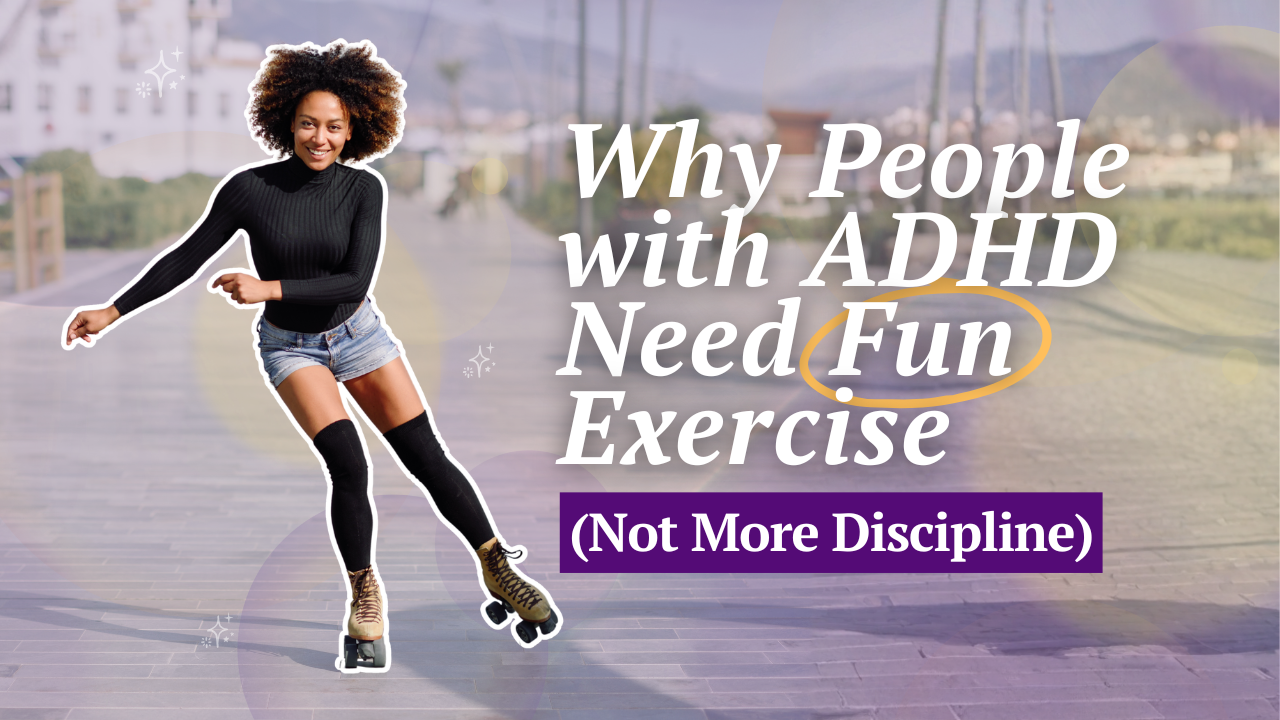
One of the most frustrating things about ADHD is that people often assume the solution is more discipline.
More discipline to stay organized.
More discipline to focus.
More discipline to manage time.
And, of course, more discipline to exercise.
One of my coaching clients came to me convinced that this was her problem.
She had started and stopped more exercise programs than she could count. She had purchased workout plans, joined gyms, downloaded apps, and created color-coded schedules.
Every time she fell off track, she blamed herself.
"I just need to be more disciplined."
But when we looked closely, something interesting emerged.
The activities she stayed with weren't the ones she was supposed to do. They were the ones she enjoyed. Dancing in her kitchen. Walking while talking to a friend. Playing pickleball.
Taking her dog on longer adventures than necessary.
She wasn't failing because she lacked discipline. She was failing because she was trying to motivate an ADHD brain using a strategy that works much better for neurotypical brains.
The ADHD Brain Runs on Interest
One of the most important things to understand about ADHD is that it is not really an attention deficit.
It's an interest regulation challenge.
The ADHD brain responds powerfully to novelty, challenge, urgency, and enjoyment. Research suggests that differences in dopamine systems make ADHD brains less responsive to delayed rewards and more responsive to activities that are inherently engaging (Barkley, 2015).
This helps explain a phenomenon many adults with ADHD know well: You can spend hours doing something fascinating and struggle to spend ten minutes doing something boring.
Exercise is no exception.
If your workout feels like punishment, your brain will eventually rebel.
If it feels rewarding, your brain is much more likely to come back for more.
Why Traditional Fitness Advice Often Fails
Many fitness programs are built around discipline.
Push harder.
Be consistent.
Ignore your feelings.
Stay motivated.
The problem is that motivation is often the wrong target for ADHD.
When people rely exclusively on discipline, exercise becomes another task on a never-ending to-do list. And eventually, the brain starts treating it like every other unpleasant obligation.
Then people conclude:
"I must be lazy."
"I just don't have enough willpower."
"I need to try harder."
In reality, they may simply need a different approach.
One that works with their brain instead of against it.
Try This: Making Exercise ADHD-Friendly
1. Follow the Fun
What it is: Choosing movement you genuinely enjoy.
Why it works: Enjoyment increases dopamine, which improves consistency.
How to do it: Make a list of activities that sound interesting, playful, or satisfying. Walking counts. Dancing counts. Gardening counts. If your body is moving, it counts.
2. Make It Social
What it is: Adding connection to movement.
Why it works: Many ADHD brains respond strongly to accountability and social stimulation.
How to do it: Walk with a friend. Join a class. Call someone while you stroll. Hire a personal trainer. Let connection support consistency.
3. Add Music, Games, or Challenges
What it is: Pairing movement with stimulation.
Why it works: Novelty and engagement increase dopamine.
How to do it: Create playlists. Track personal records. Use fitness games. Make movement feel less like work and more like play.
4. Stop Waiting to Become Disciplined
What it is: Releasing the belief that exercise success depends on becoming a different person.
Why it works: Self-acceptance creates better systems than self-criticism.
How to do it: Instead of asking, "How can I force myself to do this?" ask, "How can I make this more enjoyable?"
That question changes everything.
Coming Back to the Problem
My client eventually stopped trying to become a disciplined exerciser.
Instead, she became a playful mover.
She danced more.
Walked more.
Laughed more.
And surprisingly, she exercised more consistently than she ever had before. Not because she finally developed enough willpower. Because she stopped fighting her brain.
People with ADHD do not necessarily need more discipline.
Often, they need more engagement.
More enjoyment.
More play.
The goal isn't to trick yourself into exercising.
It's to find movement your brain wants to come back to.
That is a much more sustainable path.
Struggling to Find ADHD Support That Actually Understands Your Brain?
Many adults with ADHD spend years blaming themselves before realizing they’ve been given advice that simply wasn’t designed for the way their brains work.
The same thing can happen when looking for a therapist or coach. Not every provider understands ADHD beyond the stereotypes, and finding the right fit can make a significant difference in how supported, understood, and empowered you feel.
That's why I created What to Ask Before You Hire an ADHD Therapist or Coach.
This free guide will help you identify what truly matters when choosing ADHD support, what questions to ask during consultations, and how to recognize whether a therapist or coach understands the realities of living with ADHD.
If you've ever wondered whether you're getting the right support—or if you've left consultations feeling unsure—this guide can help you make a more informed and confident decision.
→ Download the free guide here
References
Barkley, R. A. (2015). Attention-deficit hyperactivity disorder: A handbook for diagnosis and treatment (4th ed.). Guilford Press.
Ratey, J. J., & Hagerman, E. (2008). Spark: The Revolutionary New Science of Exercise and the Brain. Little, Brown and Company.