Sometimes The Real Work Happens Between Sessions
Aug 18, 2026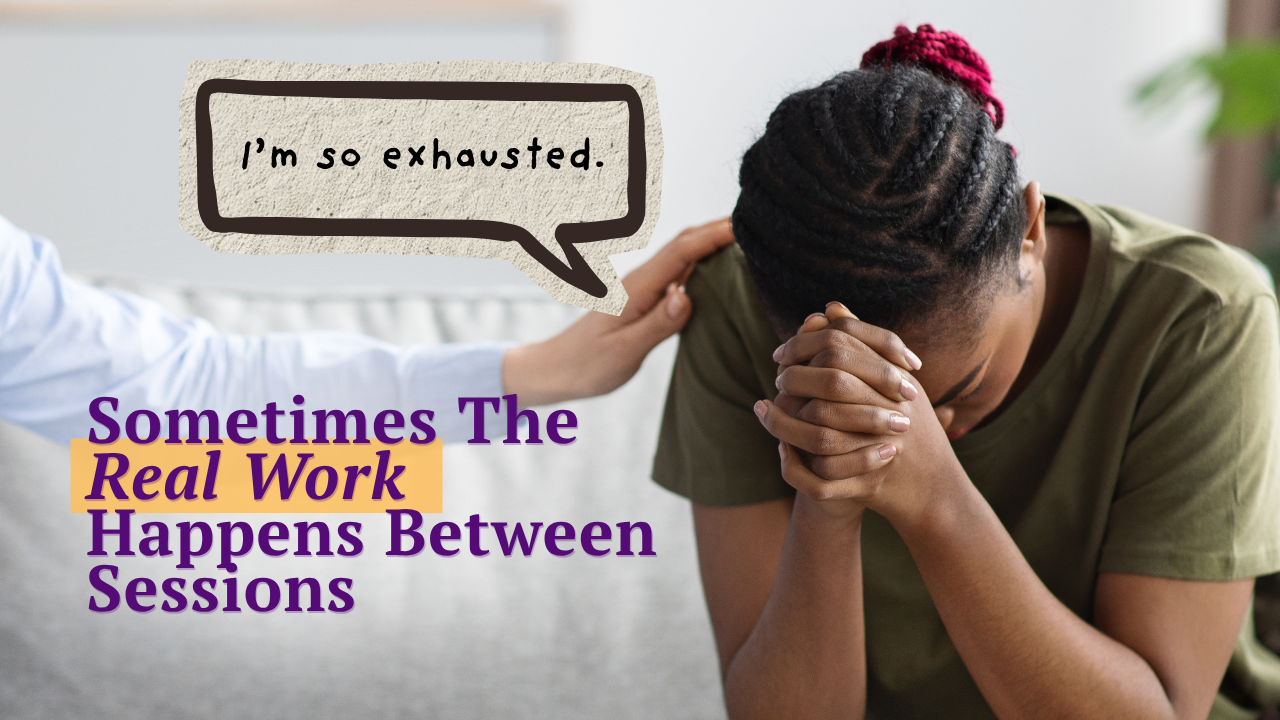
When I first became a psychologist, I thought therapy happened in my office.
After nearly thirty years, I see it differently.
Therapy begins in my office.
But some of the most meaningful healing happens after my clients leave.
One woman comes to mind.
She's a composite of many clients I've worked with over the years, so while the details have been changed to protect confidentiality, the story is true in all the ways that matter.
I'll call her Maya.
Maya came to therapy because she was exhausted.
On the surface, she had built a good life. She had a career she enjoyed, close friends, a loving wife, and a goofy rescue dog who seemed convinced every walk was the greatest adventure of his life.
But underneath, she was carrying something much heavier.
She spent so much energy trying to be who everyone else needed her to be that she had quietly lost touch with herself.
During one session, we talked about how often she ignored her own needs.
Not because she didn't know what they were.
Because she didn't trust that they mattered.
It wasn't a dramatic breakthrough.
There were no tears.
No life-changing revelation.
Just one quiet question.
"What would change if you believed your needs deserved the same care you so freely give everyone else?"
She sat quietly for a moment.
"I don't know," she finally said.
That was the end of our session.
Or at least, it looked that way.
The following week she walked into my office smiling.
"I think therapy happened after I left," she said.
She told me she had taken her dog on one of their favorite hikes instead of driving straight home.
At first, she replayed our conversation in her mind, doing what many of us do after therapy, trying to figure it all out.
Then, somewhere along the trail, she stopped trying.
She noticed the sound of the creek.
The rhythm of her footsteps.
The way her dog kept looking back to make sure she was still coming.
She laughed.
Really laughed.
For the first time in weeks.
Then something shifted.
"I realized," she told me, "I've spent years taking care of everyone else's emotional world. I don't think I've ever asked what it feels like to take care of my own."
Nothing about her life had changed during that hike.
Her job was the same.
Her relationships were the same.
The challenges waiting for her at home were exactly where she had left them.
She was different.
"I kept waiting to feel different before I started living differently. Somewhere on that trail, I realized I had it backwards."
Understanding yourself is important.
But understanding only changes your life when your nervous system has enough time to practice being different.
Research suggests that our brains continue processing emotionally meaningful experiences long after they happen. New learning becomes stronger as we rest, reflect, and integrate what we've discovered. Nature can support that process by reducing mental overload and giving our attention room to recover (Kaplan, 1995; Berman et al., 2008).
I think that's one reason so many people tell me their biggest insights don't happen while they're sitting across from me.
They happen on the drive home.
Walking the dog.
Watching the waves.
Sitting under a tree.
Therapy isn't just the fifty minutes we spend together.
It's what happens during the other 167 hours of the week.
That's where new habits are practiced.
That's where healthier boundaries are tested.
That's where compassion slowly replaces criticism.
That's where healing begins to look less like a breakthrough and more like a different way of living.
Try This
The next time you have a meaningful conversation, whether it's with a therapist, a trusted friend, or even yourself, give your mind a little room before jumping back into your day.
1. Protect the First Ten Minutes
What it is: Creating a little space after an emotionally meaningful conversation.
Why it works: Your brain continues processing important experiences after the conversation ends.
How to do it: If possible, avoid rushing to your next appointment. Take a short walk, sit on a bench, or simply spend a few quiet minutes outside.
2. Notice What Returns
What it is: Paying attention to thoughts that come back later.
Why it works: Some of our deepest insights arrive after we've stopped trying to force them.
How to do it: Keep a notebook or the notes app on your phone nearby. If a thought returns later that day or later that week, write it down.
3. Practice One Small Change
What it is: Turning insight into action.
Why it works: Healing happens through practice, not just understanding.
How to do it: Ask yourself, "What's one small thing I can do differently this week because of what I've learned?"
4. Let Nature Be Part of the Process
What it is: Using time outside to help your mind and body integrate what you're learning.
Why it works: Nature gives the nervous system a chance to settle, making it easier to absorb new ways of thinking and being.
How to do it: After your next therapy session, take the scenic route home if you can. Walk through a nearby park. Sit beneath a tree for ten minutes. Give yourself permission to let the session continue.
If you've been thinking about starting therapy but aren't sure where to begin, I've created a free guide to help you find a therapist who is the right fit for you: How to Interview a Therapist (So You Actually Find the Right One). One of the strongest predictors of successful therapy isn't a particular technique. It's finding someone with whom you feel understood, respected, and safe enough to grow.
Because sometimes the most important part of therapy isn't finding the right answers.
It's finding the right place to begin.
⟶ Download the FREE guide HERE
References
Berman, M. G., Jonides, J., & Kaplan, S. (2008). The cognitive benefits of interacting with nature. Psychological Science, 19(12), 1207-1212.
Kaplan, S. (1995). The restorative benefits of nature: Toward an integrative framework. Journal of Environmental Psychology, 15(3), 169-182.